
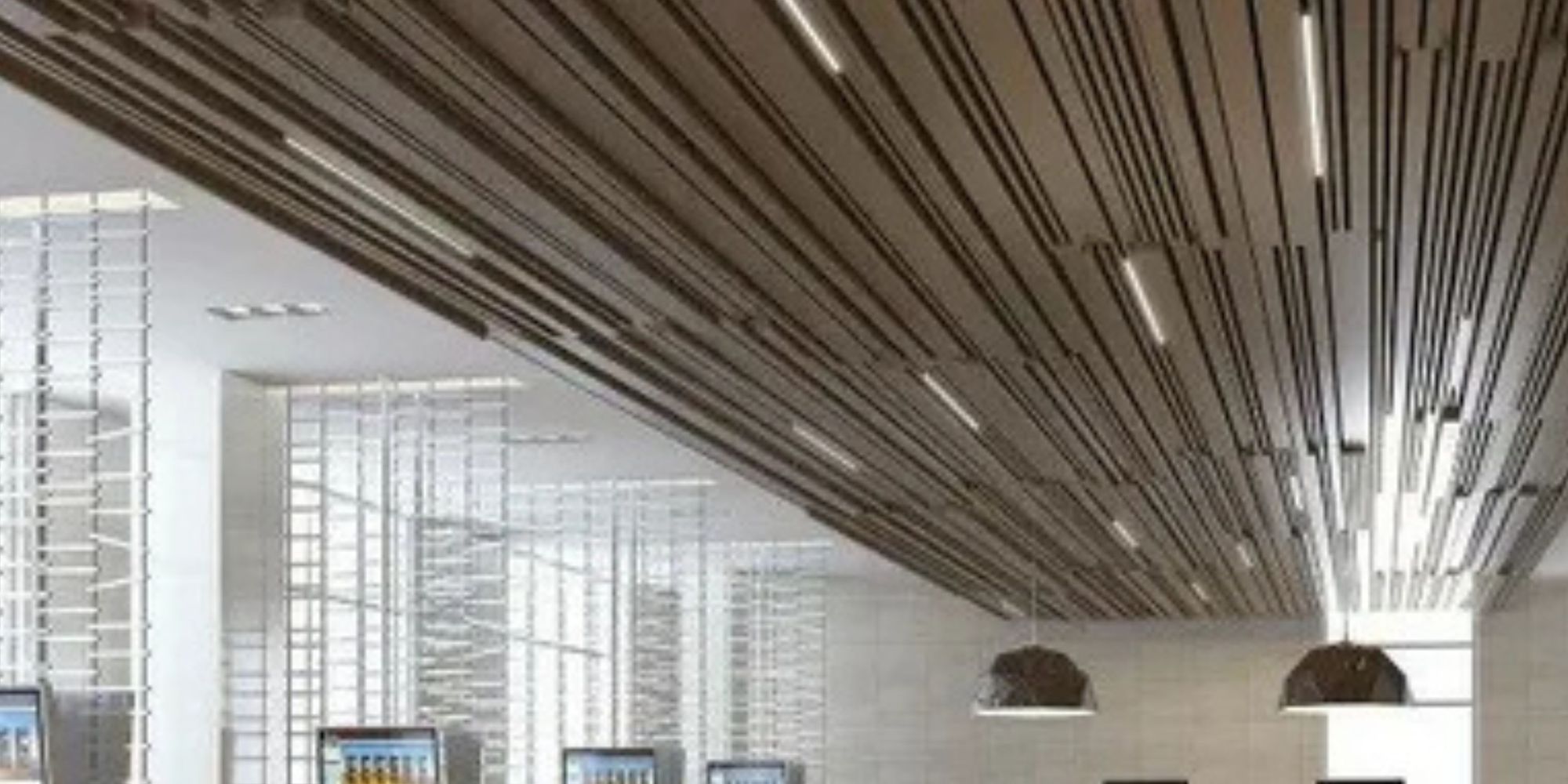
Metal ceiling tiles used to be a specialty item, chosen for a specific architectural look and priced accordingly. That positioning is shifting. The global metal ceiling tile market, valued at roughly 2.8 billion dollars in 2025, is projected to keep growing as the category moves from decorative niche to standard commercial building component.
For linear metal ceiling installation in Duluth and comparable markets, that shift shows up as metal specifications appearing in project types that would have defaulted to standard acoustic tile a decade ago.
From Aesthetic Choice to Standard Spec
Roughly 30 percent of new metal ceiling products entering the market are now developed specifically for commercial applications, with an emphasis on sound absorption and fire resistance rather than appearance alone. That is a meaningful shift from a category once judged almost entirely on finish and design.
Airports, transit hubs, and healthcare facilities have led that shift, favoring metal for its durability and low maintenance in high-traffic, frequently cleaned environments.
Where Custom Design Still Matters
Roughly a quarter of new product development in the category still targets custom architectural design: intricate patterns, unusual finishes, and project-specific dimensions. Metal has not abandoned its design pedigree, it has simply added performance requirements on top of it.
That combination is exactly what makes metal ceiling tiles installation in Duluth and similar projects more complex to scope than standard tile work. The panel has to satisfy an architect's vision and an acoustician's NRC target at the same time.
Installation Efficiency Is Becoming Its Own Selling Point
About a fifth of new metal ceiling products focus specifically on installation efficiency, reducing the time and labor a project requires. That trend matters more in regions with limited specialized labor availability, a constraint installers across the Upper Midwest, including Schaefer Acoustics, deal with regularly.
Grid systems engineered for faster, more precise alignment reduce the margin for error that made metal ceilings a slower, costlier install in years past.
Sustainability Enters the Spec Sheet
A smaller but growing share of new products, around 15 percent, incorporate recycled or low-impact materials, aligning metal ceiling tiles with the same sustainability expectations now standard across commercial construction. Combined with metal's inherent durability and long service life, that positions the category well against current green building material requirements.
Price No Longer Tells the Whole Story
Standard metal tiles remain price-competitive with premium acoustic panels, but the wider range now available, from basic lay-in tiles to heavier-gauge, corrosion-resistant, custom-finished options, means the category spans a much broader price and performance spectrum than it did even a few years ago.
That range is exactly what makes metal a realistic option across more project types. A school district and an airport terminal can both specify metal ceiling tiles and land on entirely different products suited to entirely different budgets.
A Permanent Role, Not an Occasional Upgrade
As linear metal ceiling installation in Duluth and comparable markets illustrate, metal ceiling tiles are no longer a category owners consider only when budget allows for a design flourish.
Between commercial-grade performance requirements, sustained custom demand, and improving installation efficiency, the material is settling into a permanent, functional role in commercial specification. That shift is likely to keep accelerating as more project types discover what airports and hospitals figured out first.